Key takeaways
- Run the IRS Tax Withholding Estimator with your latest pay stub. A federal W-4 change goes to your employer, and California withholding is set separately on Form DE 4.
- For 2026 you can defer up to $24,500 into a 401(k), 403(b), governmental 457 plan or the Thrift Savings Plan, plus catch-up contributions if you're 50 or older.
- You can contribute to an IRA (up to $7,500, or $8,600 if you're 50 or older) or an HSA for 2026 until April 15, 2027.
- Health FSA money is generally "use it or lose it." Check your plan's deadline now.
- New for 2026: if you don't itemize, you may be able to deduct up to $1,000 of cash gifts to qualified charities ($2,000 if married filing jointly).
Is my withholding on track for 2026?
The quickest way to find out is the IRS Tax Withholding Estimator. Have your most recent pay stub handy, plus your last tax return if you can. The tool estimates whether you're on pace to owe or get money back and can produce a filled-in Form W-4. You give a new W-4 to your employer, not the IRS.
California withholding is separate. To change how much state tax comes out of your pay, you file Form DE 4 (from the California Employment Development Department) with your employer.
It's especially worth checking if you changed jobs, worked two jobs, got married or divorced, or received a bonus this year. Employers can withhold federal tax on bonuses and other supplemental wages at a flat 22%, which may not match your actual tax rate. A few weeks of adjusted withholding in November and December can narrow a gap before you file.
How much can I put in my 401(k) for 2026?
For 2026, the IRS limit on employee salary deferrals is $24,500 for 401(k), 403(b), governmental 457 plans and the federal Thrift Savings Plan. If you're 50 or older by the end of the year, your plan may let you add an $8,000 catch-up contribution, for a total of $32,500. If you're 60, 61, 62 or 63, the catch-up limit is $11,250 instead.
Deferrals come out of your paychecks, so the paychecks left this year are your window for 2026. Ask payroll how soon a change takes effect. If you switched jobs this year, remember that the limit generally applies to all of your deferrals combined, across every plan you participated in.
Can I still contribute to an IRA for 2026?
Yes. You can contribute to a traditional or Roth IRA for 2026 any time until your tax-filing deadline, not including extensions, which is April 15, 2027 for most people. The 2026 limit is $7,500, or $8,600 if you're 50 or older, and it can't be more than your taxable compensation.
If you or your spouse are covered by a retirement plan at work, your traditional IRA deduction may be reduced or eliminated depending on income. For 2026, the phase-out range is $81,000 to $91,000 for single filers covered at work, and $129,000 to $149,000 for married couples filing jointly when the contributing spouse is covered. When you contribute between January 1 and April 15, tell the IRA provider which year the money is for.
What happens to my FSA money at the end of the year?
A health flexible spending arrangement (FSA) is generally "use it or lose it." Your employer's plan can offer either a short grace period or a limited carryover of unused money into the next year, but neither is required. Look up your plan's rules and deadline, then schedule appointments, refill prescriptions or buy eligible supplies before it runs out. If you're choosing next year's amount during open enrollment, the 2026 salary-reduction limit for a health FSA is $3,400.
Does my HSA work the same way for California taxes?
No. If you have a high-deductible health plan, the 2026 federal HSA limit is $4,400 for self-only coverage and $8,750 for family coverage, plus $1,000 more if you're 55 or older. You can generally contribute for 2026 until your filing deadline.
California doesn't follow the federal HSA rules. According to the Franchise Tax Board, HSA contributions aren't deductible on your California return, and interest and other earnings in the account are taxable to California each year. Your federal and state returns will show different numbers, and that's expected.
Do charitable donations count if I don't itemize?
Starting with tax year 2026, they can. The IRS says taxpayers who don't itemize may deduct up to $1,000 of cash contributions to qualified organizations, or $2,000 if married filing jointly. A few rules to keep in mind:
- Gifts must go to a qualified organization. You can check a charity with the IRS Tax Exempt Organization Search. Gifts to individuals aren't deductible.
- Donations to donor-advised funds generally don't qualify for this deduction.
- Keep a bank record or a written acknowledgment from the charity showing its name, the date and the amount.
If you itemize, charitable gifts are still claimed on Schedule A, subject to the usual limits.
What should I gather before January?
- Your last pay stub of the year, to check against your Form W-2 when it arrives.
- Donation receipts and bank records for 2026 gifts.
- FSA and HSA statements, and confirmations of any IRA contributions.
- Notes on any life changes this year: a move, a marriage, a new child, or a new job.
Quick FAQ
Where do I send a new Form W-4?
To your employer, not the IRS. For California withholding, give your employer a Form DE 4.
Can I contribute to both a 401(k) and an IRA for 2026?
Yes. Being covered by a workplace plan doesn't stop you from contributing to an IRA, but it can reduce or eliminate the deduction for traditional IRA contributions depending on your income.
Can I claim the new $1,000 charitable deduction if I itemize?
No. It's for taxpayers who don't itemize. If you itemize, you deduct qualifying charitable gifts on Schedule A instead.
What's the deadline for 2026 IRA and HSA contributions?
Generally your tax-filing deadline, not including extensions: April 15, 2027 for most people.
Sources
- IRS — Tax Withholding Estimator — https://www.irs.gov/individuals/tax-withholding-estimator
- FTB — Adjust your wage withholding — https://www.ftb.ca.gov/Pay/withholding/adjust-your-wage-withholding.html
- IRS — Publication 15-B (2026), Employer's Tax Guide to Fringe Benefits — https://www.irs.gov/pub/irs-pdf/p15b.pdf
- IRS — 401(k) limit increases to $24,500 for 2026, IRA limit increases to $7,500 (IR-2025-111) — https://www.irs.gov/newsroom/401k-limit-increases-to-24500-for-2026-ira-limit-increases-to-7500
- IRS — 401(k) and profit-sharing plan contribution limits — https://www.irs.gov/retirement-plans/plan-participant-employee/retirement-topics-401k-and-profit-sharing-plan-contribution-limits
- IRS — IRA contribution limits — https://www.irs.gov/retirement-plans/plan-participant-employee/retirement-topics-ira-contribution-limits
- IRS — Publication 590-A, Contributions to IRAs — https://www.irs.gov/publications/p590a
- IRS — Publication 969, Health Savings Accounts and Other Tax-Favored Health Plans — https://www.irs.gov/publications/p969
- IRS — Revenue Procedure 2025-19 (2026 HSA limits) — https://www.irs.gov/pub/irs-drop/rp-25-19.pdf
- FTB — Publication 1005, Pension and Annuity Guidelines (HSA section) — https://www.ftb.ca.gov/forms/2025/2025-1005-publication.pdf
- IRS — Topic no. 506, Charitable contributions — https://www.irs.gov/taxtopics/tc506
- IRS — Publication 6196, Charitable Contribution Deduction Tips for Non-Itemizers — https://www.irs.gov/pub/irs-pdf/p6196.pdf
This article is general information, current as of November 2, 2026, and isn't tax advice for your situation. Tax law changes; results depend on your facts, and no particular outcome is guaranteed.
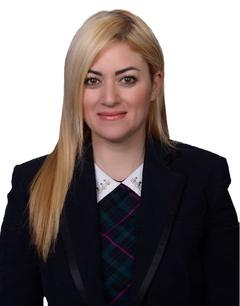
Talar Hanounek, CPA is a California-licensed CPA (license #161519) who prepares individual tax returns, including Schedule C returns for self-employed people and small business owners, for clients across Los Angeles and the San Fernando Valley. More about Talar.
If you'd like a second look at your withholding or contributions before December 31, I offer a free first consultation by phone, video or in person at my Burbank office.
Questions about your own taxes? Call (818) 293-0453
Talar Hanounek, CPA, prepares individual and self-employed (Schedule C) returns from her Burbank office, by phone, video or in person. She speaks English, Armenian and Arabic. The first consultation is free.